Editorial Board News
The members of the Editorial Board of the "Journal of Experimental and Clinical Cancer Research" would like to send Prof. Lilian Siu our warm congratulations on her achievement and best wishes for her success for such a high office as President Elect for the American Association for Cancer Research - AACR for years 2024-2025
Colorectal Cancer Awareness Month
In recognition of Colorectal Cancer Awareness Month this March, we have selected a collection of articles on colorectal cancer from across our open access portfolio. Together, these articles contribute to the evolving landscape of colorectal cancer research and the fight against this prevalent and impactful disease.
Call for papers: Liquid Biopsy in Precision Oncology
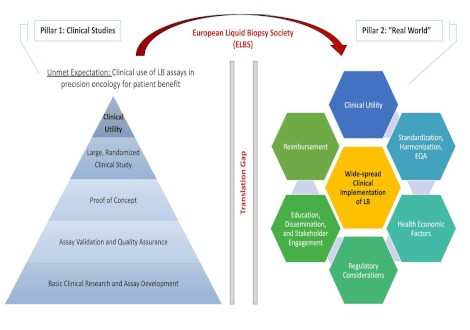
Journal of Experimental & Clinical Cancer Research is delighted to announce a new thematic series focused on:
Liquid Biopsy in Precision Oncology
The Special Issue will accept Research Articles and Reviews in this topic. Submit here.
- Submission opens: 1st February 2024
- Submission deadline: 31st January 2025
Click here to view this collection. Click here to access all thematic series published to date in Journal of Experimental & Clinical Cancer Research.
Call for papers: CRISPR-Cas9 system, the next generation in cancer therapy and target discovery

Journal of Experimental & Clinical Cancer Research is delighted to announce a new thematic series focused on:
CRISPR-Cas9 system, the next generation in cancer therapy and target discovery
The Special Issue will accept Research Articles and Review in this topic. Submit here.
- Submission opens: 1st April 2023
- Submission deadline: 30th June 2024
Click here to view this collection. Click here to access all thematic series published to date in Journal of Experimental & Clinical Cancer Research.
Recognising Editorial Excellence
 Journal of Experimental & Clinical Cancer Research is a top rated Springer Nature journal. Prof. Mauro Castelli and the editorial team performed in the top percentile of journals based on data collected from the Journal Author Satisfaction Survey. We are recognising extraordinary editors for their commitment and passion to their journals. Read more about editorial excellence here.
Reviewer Acknowledgement and New Recruitment
The Editor-in-Chief of Journal of Experimental & Clinical Cancer Research would like to thank all of our reviewers who have contributed to the journal and is looking for new reviewers to assess manuscripts. For consideration, please send your CV with keywords and expertise to editorialjeccr@gmail.com
Archival content
Journal of Experimental & Clinical Cancer Research has been publishing since 1982. Prior to publishing with BioMed Central from 2008, Journal of Experimental & Clinical Cancer Research was published in print. For enquiries about previous content, please contact us on:
editorialjeccr@gmail.com

